
Introduction
BESS factory acceptance testing is the single most important quality gate between your purchase order and a functioning energy storage system. It is the last moment you have full leverage over the manufacturer — once the containers leave the factory, your negotiating power drops significantly. To ensure this stage is executed thoroughly and independently, many project stakeholders engage specialized BESS Factory Acceptance Testing (FAT) services.
And yet, in my experience inspecting battery energy storage systems across Asia, Europe, and the Americas, roughly two out of three BESS projects have issues uncovered during factory acceptance testing (when full testing covering battery analytics during the capacity test is performed). That is not a typo. The majority of projects we inspect at the factory stage have at least one BESS with problems ranging from minor punch-list items to show-stopping defects that would have caused capacity loss, safety hazards, or warranty disputes down the line.
This guide walks you through everything you need to know about BESS factory acceptance testing: what it covers, what manufacturers often skip, how to structure your FAT protocol, and why traditional testing alone may not be enough.
What Is BESS Factory Acceptance Testing?
Factory acceptance testing is a structured verification process conducted at the manufacturer's facility before a BESS is shipped to its installation site. The purpose is straightforward: confirm that the system meets the contractual specifications, performance requirements, and applicable safety standards before you take delivery.
A comprehensive BESS factory acceptance testing program is not a single event. It consists of multiple test phases covering every major subsystem. Based on the Sinovoltaics Quality Assurance Plan (QAP) framework, a thorough FAT covers the following areas:
1. Container-Level FAT
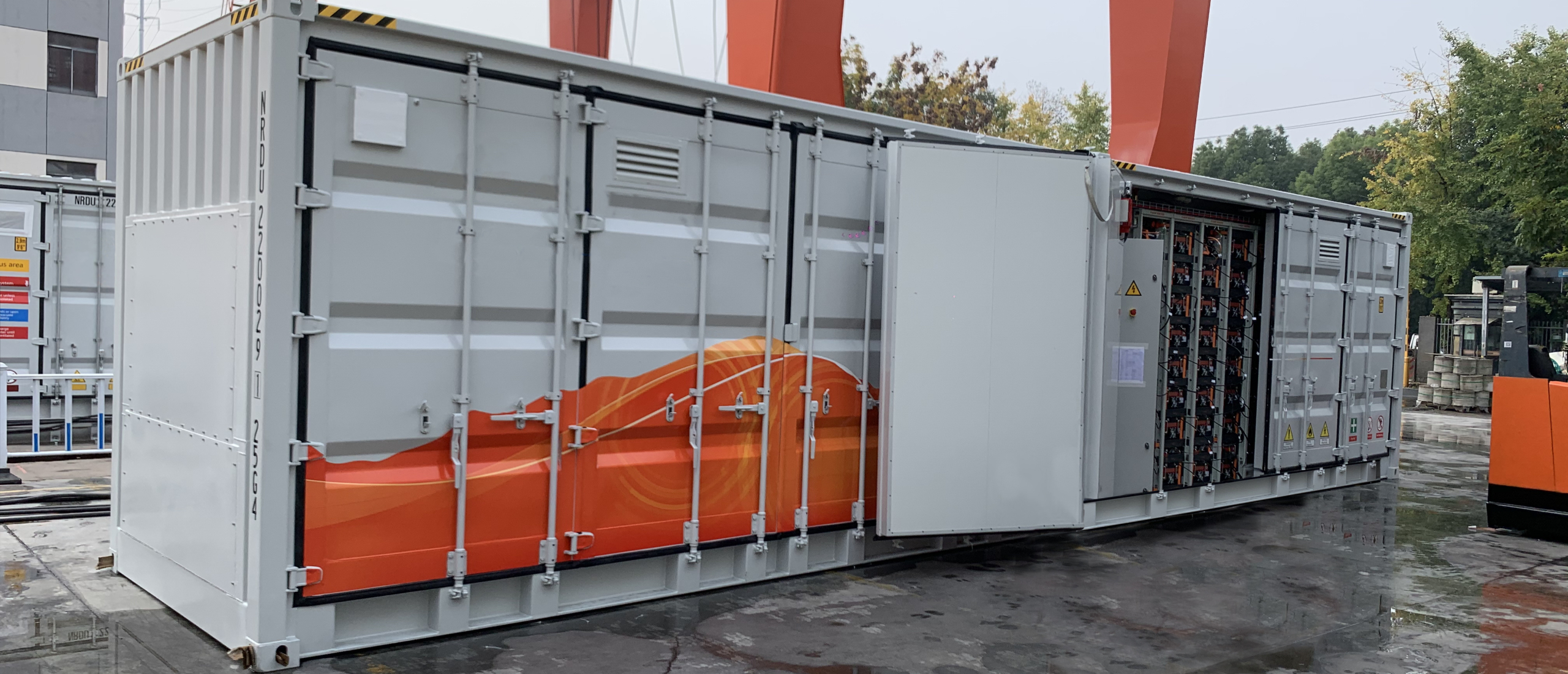
Once racks are installed in the container, you move to system-level verification. Container FAT includes HVAC functional testing, fire suppression system verification, gas detection sensor calibration, door interlock testing, and IP rating confirmation. The container is the last line of physical protection for the battery system, and deficiencies here create long-term operational and safety risks.
2. PCS (Power Conversion System) FAT
The power conversion system converts DC energy from the batteries into AC power for the grid. PCS factory acceptance testing verifies efficiency curves, harmonic distortion levels, reactive power capability, and protection functions. Key parameters include rated power output, AC/DC voltage ranges, THD (total harmonic distortion), and response times. Applicable standards include IEC 62477-1 for power electronic converters.
Note : given your battery solution (DC block or AC block), the PCS will be either directly integrated into the BESS container, or a stand-alone container, most probably manufactured by a different brand at a different factory.
3. BMS (Battery Management System) FAT
The battery management system is the brain of your BESS. BMS FAT verifies alarm thresholds, protection logic, communication protocols, and data logging accuracy. You need to confirm that the BMS correctly triggers protections for overvoltage, undervoltage, overcurrent, and overtemperature conditions. A BMS that fails to detect a thermal event is not just a performance issue — it is a safety hazard.
4. Battery Module and Rack FAT
This is where most of the testing time — and most of the problems — concentrate. Battery module FAT involves verifying cell-level and module-level parameters: open circuit voltage (OCV), internal resistance (IR), capacity, and visual inspection for physical damage. At the rack level, you verify series/parallel configurations, busbar torque, insulation resistance, and rack-level BMS communication.
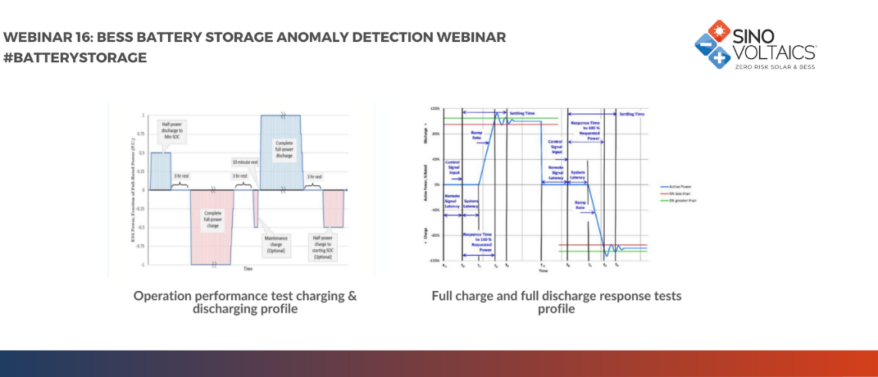
The ESIC (Energy Storage Integration Council) test methodology recommends a standardized operational test duty cycle that includes available energy capacity testing (see more in dedicated paragraph), round-trip efficiency (RTE) measurement, self-discharge rate testing, and response/rise/settling time verification. These are not optional extras — they form the baseline for confirming your system performs as specified.
A critical point: testing should cover 100% of BESS, not a sample. Some manufacturers propose sampling-based testing (e.g., testing 2 out of 50 BESS) to save time and cost. This is unacceptable for a system where a single defective rack can cause cascading failures. Every BESS must be tested individually.
5. Emergency Procedure Verification
Emergency procedures are often treated as an afterthought during BESS factory acceptance testing. They should not be. You need to verify emergency shutdown functionality at multiple levels (rack, container, system), fire suppression system activation and coverage, ventilation response to gas detection events, and communication of alarm states to the SCADA/EMS system.
6. EMS Integration Testing
The Energy Management System (EMS) integration test confirms that the BESS communicates correctly with the site-level or grid-level control system. This includes verifying setpoint commands (active/reactive power), state reporting (SOC, SOH, alarms), scheduling functionality, and curtailment response. EMS integration issues are among the most common causes of commissioning delays, so catching them at the factory stage saves weeks of troubleshooting on site.
Note : this integration testing is critical in case the PCS / EMS / battery-side combo has never been integrated together before.
7. Capacity Testing
Capacity or Performance testing validates the system against its contractual specifications under controlled conditions. This includes full charge/discharge cycles at rated power, capacity verification at reference conditions (0.5C rate, ideally 25°C), round-trip efficiency measurement, and related parameters procurements (very often overseen in standard FAT, but can be caught with data analytics tools). The results from performance testing become your contractual baseline — any degradation below these values during operation triggers warranty provisions.
The Four Manufacturer Shortcuts You Must Watch For
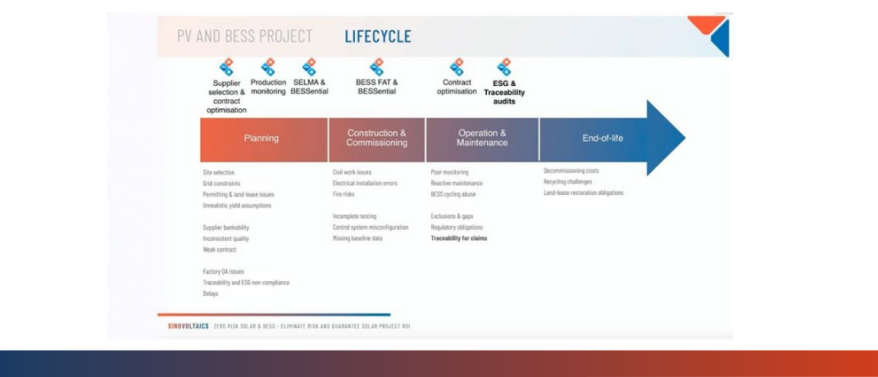
Over years of conducting BESS factory acceptance testing inspections, we have identified a pattern of shortcuts that manufacturers take when they think no one is watching closely enough. Here are the five most common:
(1) No FAT performed at all. Some manufacturers will ship systems with nothing more than a basic power-on test. If your contract does not explicitly require a witnessed FAT, do not assume one will happen.
(2) No capacity testing. The manufacturer runs basic functional checks but skips the full charge/discharge cycle that validates capacity and efficiency.
(3) Sampling-based testing. Instead of testing every bess, the manufacturer tests a subset and extrapolates. In a project with hundreds of BESS, the BESS you did not test are the ones most likely to cause problems.
(4) Testing only at limited load. Testing the BESS at 100% rated power is the best way to stress your BESS and check if something is wrong.
Why Traditional FAT Is Not Enough: The Case for Advanced Diagnostics
Traditional BESS factory acceptance testing checks whether the system meets its specifications at a point in time. But it has a fundamental limitation: it treats the battery as a black box. If the system delivers rated capacity today, it passes — regardless of whether the individual racks and battery cells inside are well-matched and likely to age uniformly.
This is where advanced battery diagnostics change the game. At Sinovoltaics, we developed BESSential — a diagnostic approach that combines traditional FAT inspection with battery pack-level analytics. Instead of just checking whether the system works, BESSential examines whether the battery packs are well-matched in terms of voltage, internal resistance, and capacity.
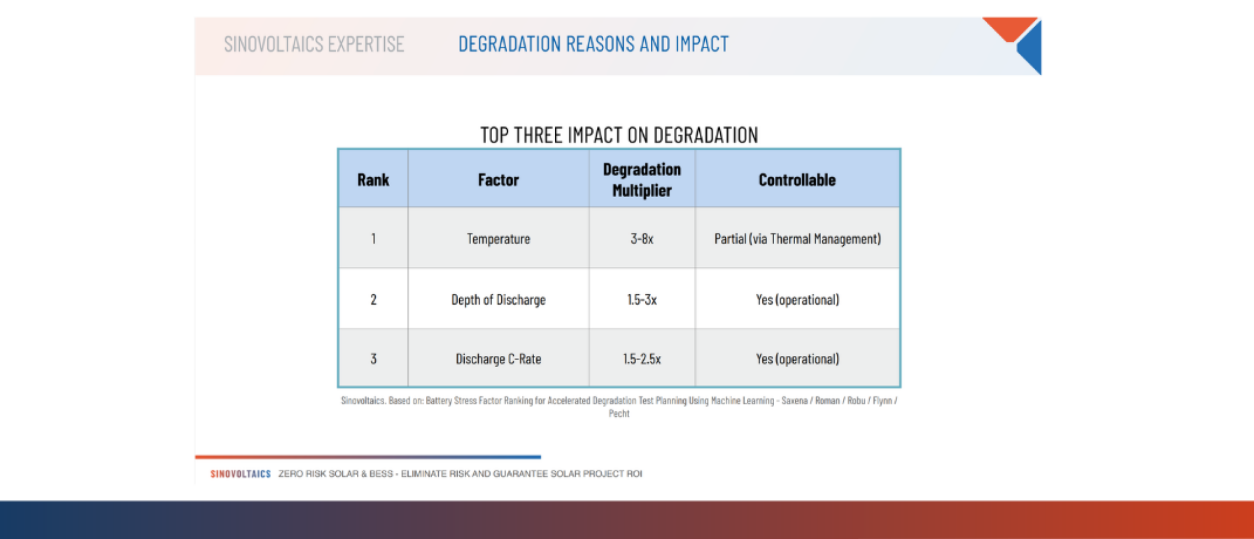
Why does this matter? Because cell-to-cell variation is the leading predictor of long-term performance degradation. In a real project — a 50 MWh European energy storage deployment across 23 containers — BESSential diagnostics revealed voltage variations between cells and temperature inhomogeneity of over 25% that traditional factory acceptance testing would have completely missed. In one case, a battery pack showed overheating behavior during the diagnostic phase and was replaced before shipping.
These are not theoretical risks. Poor balancing drives balancing losses that can cost significant amounts in weekly energy throughput. Poor cell matching accelerates capacity fade, shortening the effective life of your investment. And temperature hotspots are an early indicator of potential thermal events.
The takeaway: a BESS factory acceptance testing protocol that only checks system-level performance is checking the output without understanding the input. Advanced diagnostics give you visibility into the health of individual battery racks, packs and cells — the building blocks that determine whether your system will perform as expected over its 10 to 20 year design life.
How to Structure Your BESS FAT Protocol
Pre-FAT documentation review. Before signing your procurement contract, review all design documents, test procedures, and quality records. Confirm that the manufacturer's proposed test plan covers all contractual requirements. Flag any gaps before signing the contract — not after testing begins.
Witness testing schedule. Define which tests require witness presence (ideally all critical tests) and which can be conducted by the manufacturer with documentation review. At a minimum, performance testing and emergency procedure verification should be witnessed.
Pass/fail criteria. Every test must have clearly defined acceptance criteria tied to the contract specifications. Ambiguous criteria lead to disputes. If the contract says "rated capacity," define exactly how it is measured: reference temperature, C-rate, SOC window, and number of cycles.
Non-conformance procedure. Define in advance what happens when a test fails. Can the manufacturer rework and retest? How many retests are allowed? What is the escalation path? Having this agreed before FAT begins avoids delays and arguments on the factory floor.
Documentation and reporting. All test results, photographs, and non-conformance records should be compiled into a formal FAT report. This report becomes a contractual deliverable and the baseline for future warranty claims.
Key Standards and References
- IEC 62619 — Safety requirements for secondary lithium cells and batteries for industrial applications
- UL 1973 — Standard for batteries for use in stationary and motive auxiliary power applications
- UL 9540 — Standard for energy storage systems and equipment
- UL 9540A — Test method for evaluating thermal runaway fire propagation (6th edition released March 2025)
- NFPA 855 — Standard for the installation of stationary energy storage systems (2026 update)
- ESIC Energy Storage Test Manual — Standardized test protocols for energy storage performance verification
- ESIC Energy Storage Commissioning Guide — Best practices for commissioning including FAT phase
- ISO 2859 — Sampling procedures for inspection by attributes
What Happens After FAT?
BESS factory acceptance testing is not the end of quality assurance — it is a critical milestone in a longer chain. After a successful FAT, the system moves through transportation (with its own set of requirements including UN38.3 compliance), site acceptance testing (SAT), and commissioning before reaching commercial operation.
Each phase builds on the documentation and baselines established during FAT. A thorough factory acceptance testing process makes every subsequent phase smoother, faster, and less risky. A rushed or incomplete FAT, on the other hand, pushes problems downstream where they cost more to fix and create more disruption.
Conclusion
BESS factory acceptance testing is your highest-leverage quality intervention. It is the moment when you have the most control, the most access, and the most ability to catch problems before they become expensive field failures.
The key principles: test every subsystem (not just the batteries), test every rack (not a sample), include advanced diagnostics (not just system-level checks), and document everything (it is your warranty insurance).
If you are planning a BESS procurement and want to ensure your factory acceptance testing protocol is comprehensive, contact the Sinovoltaics team to discuss how our FAT inspection and BESSential diagnostic services can protect your investment from day one.