
Financial resilience is becoming an increasingly important factor in the renewable energy supply chain. As global solar deployment accelerates, project developers, investors, and procurement teams must consider not only technological performance but also the financial stability of equipment manufacturers. Supplier insolvency, margin pressures, and market volatility can significantly impact project timelines, warranties, and long-term bankability.
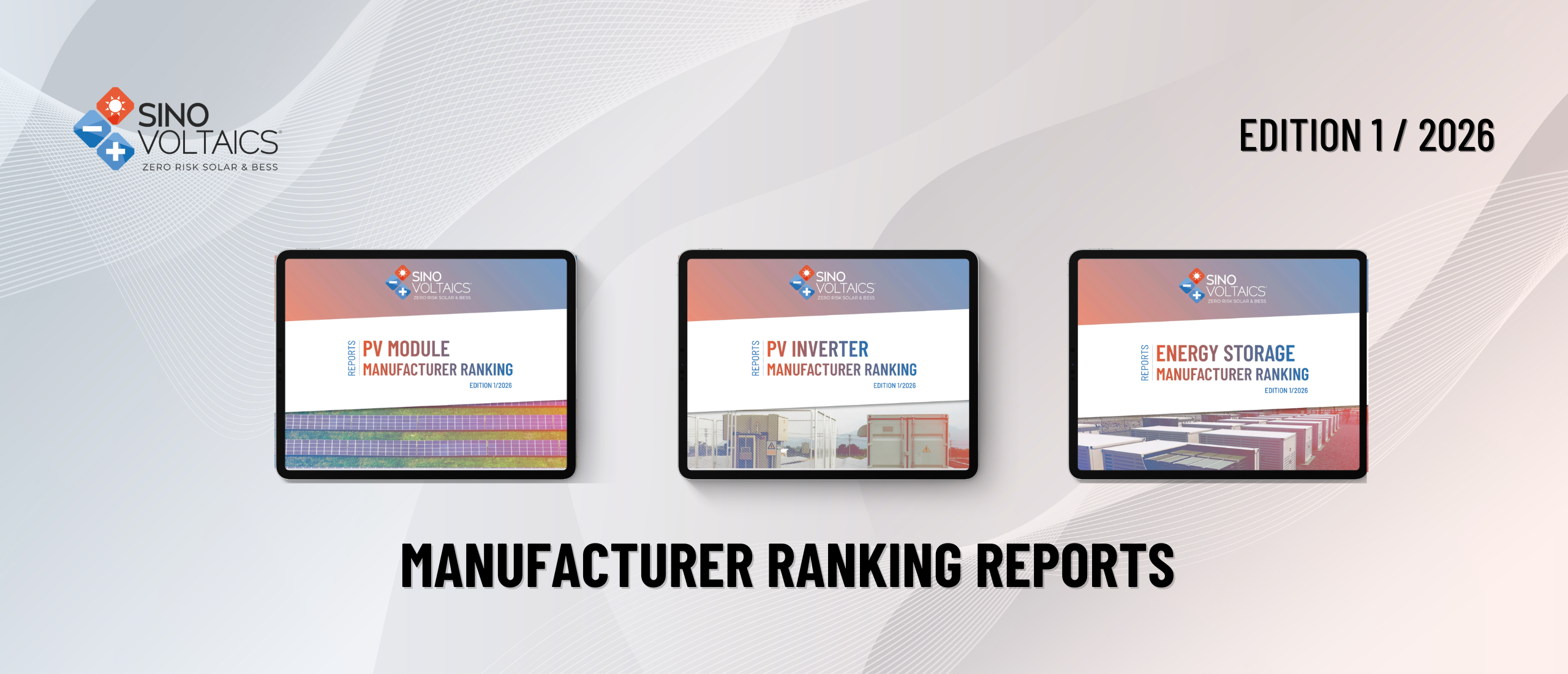
To bring greater transparency to the market, Sinovoltaics has released the 2026 Financial Stability Ranking Edition #1, evaluating the financial health of global PV module, inverter, and energy storage manufacturers using the Altman Z-score, a widely recognized indicator of corporate solvency.
The latest edition highlights several important trends across the renewable manufacturing landscape.
What Is the Altman Z-score?
The Altman Z-score is a proven financial model used to assess a company's credit strength and bankruptcy risk. Developed by Professor Edward Altman, the model analyzes multiple financial ratios derived from a company’s balance sheet and income statement to determine its financial stability.
At Sinovoltaics, our Altman Z-score analysis is specifically tailored to evaluate the financial health of solar PV module manufacturers, solar inverter manufacturers, and energy storage suppliers.
For developers, investors, and EPC contractors, understanding the financial stability of equipment manufacturers is essential. Choosing financially sound partners helps:
• Reduce the risk of supply chain disruptions
• Improve project bankability
• Protect long-term warranty coverage
• Safeguard investment returns
In an industry where projects often operate for 20–30 years, financial stability becomes just as important as product performance.
Understanding the Altman Z-score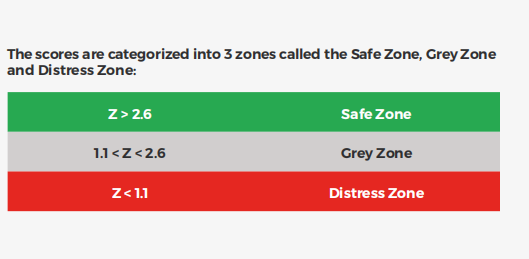
The Altman Z-score categorizes companies into three financial risk zones:
• Safety Zone — Z-score ≥ 2.6
Companies in this range are considered financially stable and unlikely to face bankruptcy in the near future.
• Grey Zone — Z-score between 1.1 and 2.6
Companies in this range show moderate financial risk. While not necessarily distressed, careful monitoring of financial trends is important.
• Distress Zone — Z-score < 1.1
Companies in this category face a significantly higher probability of financial distress or bankruptcy within approximately two years.
However, the trend of the Z-score over time is just as important as the score itself. Companies may remain stable within the grey zone for years, while others may show deteriorating financial health even if they remain above distress thresholds.
Why Financial Stability Matters for Solar Manufacturers
The financial strength of a solar manufacturer directly impacts the credibility and longevity of its product warranties. Many solar modules, inverters, and battery storage systems are sold with warranties extending 20–25 years
.However, not all manufacturers remain in business for that entire period. If a supplier experiences financial distress or bankruptcy, it can leave project owners with limited recourse for warranty claims or performance guarantees.
As solar projects mature, an important question arises:
Who will be responsible for addressing performance issues, declining panel efficiency, or replacing faulty inverters or battery storage systems two, five, or even ten years into the future?
Partnering with financially stable manufacturers helps mitigate these risks and ensures long-term reliability across solar and storage assets.
To support better decision-making, the Sinovoltaics Financial Stability Ranking evaluates:
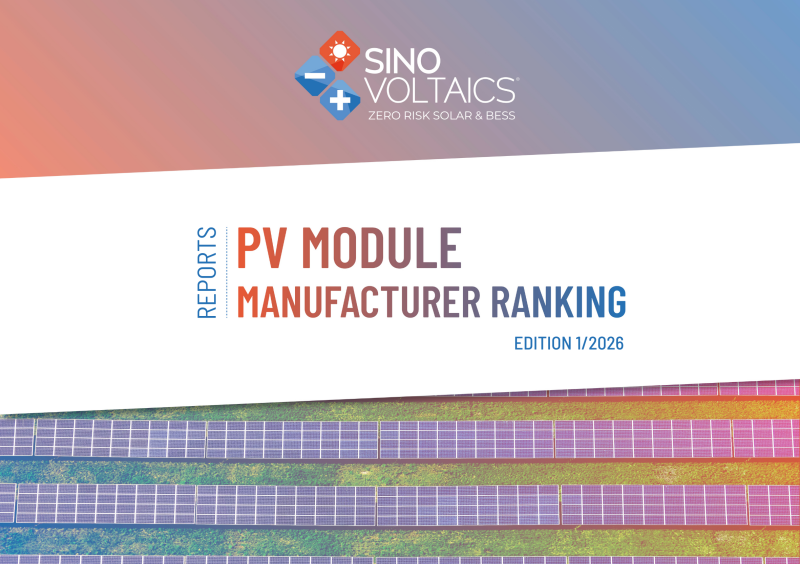
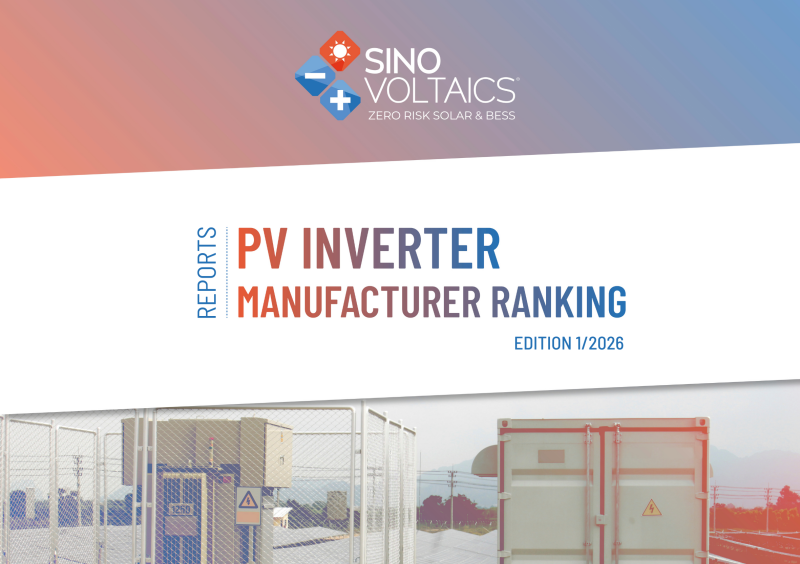
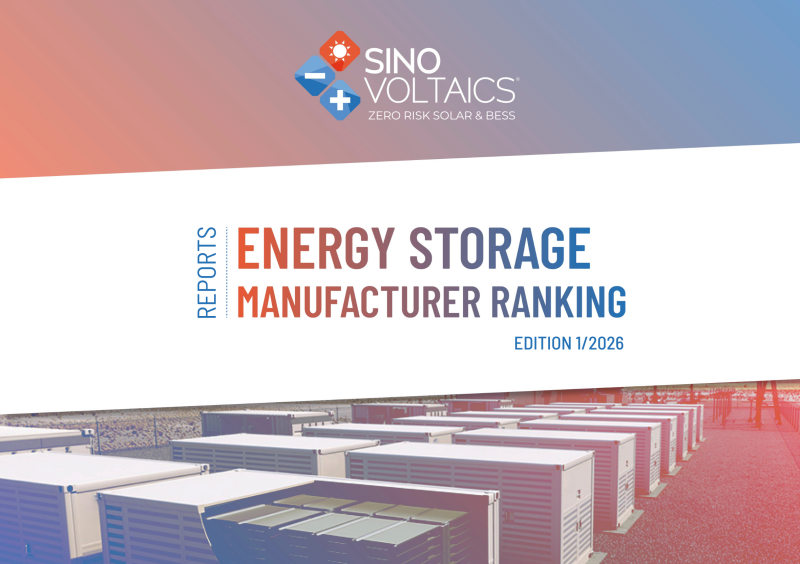
50+ battery and energy storage suppliers
These rankings provide a valuable benchmarking tool for comparing vendor financial health and identifying companies that may face elevated bankruptcy risks within the next two years.
PV Module Sector: Signs of Increasing Financial Maturity
The PV module manufacturing sector continues to show improving financial stability. In this edition, 12 manufacturers are positioned within the safe zone, defined as companies maintaining Altman Z-scores of 2.6 or higher, compared with 11 companies in the previous reporting period.
Among these companies, First Solar, headquartered in Arizona, United States, stands out with an Altman Z-score of 5.48 as of December 2025. While the company’s score has experienced moderate fluctuations, from 6.41 in Q1 2023, 5.21 in Q2 2024, and 5.82 in Q3 2024, it has consistently remained well within the safe zone. This sustained performance reflects strong operational management, disciplined financial practices, and a resilient balance sheet, positioning First Solar among the most financially stable players in the PV manufacturing sector.
A comparison with peers such as Kyocera and TSEC further illustrates broader market dynamics. Kyocera has maintained relatively stable Z-scores within the safe zone over the observed period, while TSEC shows a more pronounced downward trajectory, declining from 3.33 in Q1 2023 to 2.36 in Q4 2025, falling below the safe-zone threshold.
Overall, the data suggests that the PV module industry is gradually moving toward greater financial maturity, with a growing number of manufacturers maintaining healthy solvency levels.
Inverter Manufacturers: Continued Stability Across the Sector
The inverter manufacturing segment continues to demonstrate solid financial resilience. In this edition, 18 manufacturers remain within the safe zone, compared with 19 companies in the previous report. While this represents a slight decrease, the number of financially stable players remains high, indicating continued stability across the inverter manufacturing landscape.
ABB, headquartered in Zurich, Switzerland, stands out with an Altman Z-score of 5.03 as of December 2025. The company’s financial trajectory shows consistent improvement, rising from 3.26 in Q1 2023 to 4.19 in Q2 2024, 4.62 in Q3 2024, and 5.03 in Q4 2025.
Other manufacturers also demonstrate solid financial positions. Emerson shows a clear upward trend, improving from 3.62 in Q1 2023 to 4.12 in Q4 2025, while INVT Solar maintains stable solvency levels despite moderate fluctuations.
Together, these trends suggest that the inverter sector continues to demonstrate financial resilience and operational discipline.
Energy Storage and Battery Sector: Stable but Competitive Landscape
The energy storage manufacturing sector maintains solid financial stability. In this edition, 21 manufacturers remain within the safe zone, defined as companies with Altman Z-scores of 2.6 or higher, compared with 23 companies in the previous edition.
Solid Power, headquartered in Louisville, Colorado, United States, currently holds an Altman Z-score of 13.32 as of December 2025, placing it among the most financially robust companies in the sector. Although the company’s score declined from 9.95 in Q1 2023 to 3.52 in Q3 2024, it rebounded sharply in 2025, indicating a significant strengthening of its financial position.
Peer comparisons further highlight the sector’s stability. Sanyo maintains consistently strong Z-scores, while EnerSys demonstrates gradual improvement in its financial profile, reaching 4.05 in Q4 2025.
Despite competitive pressures, many established players in the battery manufacturing landscape continue to maintain solid solvency levels and disciplined financial management.
A More Financially Resilient Renewable Manufacturing Sector
Across PV modules, inverters, and energy storage technologies, the latest rankings suggest that the renewable manufacturing sector is gradually strengthening its financial foundations.
While some fluctuations remain, an increasing number of manufacturers are maintaining healthy solvency profiles and disciplined financial structures. For project developers, investors, and procurement professionals, these insights provide valuable guidance when evaluating supplier bankability and long-term reliability. Download the full 2026 Financial Stability Ranking – Edition #1.
Talk to Our Experts
Planning a solar or energy storage project? Our team can help you evaluate manufacturer bankability, supply chain risks, and supplier transparency. Reach out to learn how Sinovoltaics can support your procurement and risk mitigation strategy.