Energy Storage and Renewable Integration: How BESS Supports the Grid
Introduction
As the world transitions to renewable energy sources like solar and wind, Battery Energy Storage Systems (BESS) play a crucial role in ensuring grid stability, energy reliability, and efficient power distribution. By storing excess energy and delivering it when needed, BESS enables better renewable integration and reduces reliance on fossil fuels.
This guide explores how BESS supports renewable energy, grid stability, and future energy markets.
1. The Challenges of Renewable Energy Without Storage
• Intermittency: Solar and wind power depend on weather conditions, causing fluctuations in electricity supply.
• Grid Instability: Sudden increases or drops in renewable generation can lead to voltage and frequency imbalances.
• Energy Curtailment: Excess renewable energy is sometimes wasted because the grid cannot handle it in real-time.
• Mismatch Between Supply and Demand: Peak solar generation occurs during the day, but electricity demand peaks in the evening.
Key Takeaway: Without energy storage, renewable power generation alone cannot ensure a stable and reliable energy supply.
2. How BESS Enhances Renewable Energy Integration
A. Storing Excess Renewable Energy for Later Use
• BESS captures surplus solar or wind energy when generation exceeds demand.
• Stored energy is discharged when renewable generation drops (e.g., at night or during low wind conditions).
• Prevents curtailment of renewable energy, maximizing utilization.
B. Grid Frequency and Voltage Stabilization
• BESS responds to frequency deviations within milliseconds, preventing grid instability.
• Maintains stable voltage levels, ensuring consistent power delivery.
C. Peak Load Shaving
• Reduces demand during peak hours by discharging stored energy, lowering electricity costs.
• Helps utilities avoid grid congestion and expensive infrastructure upgrades.
D. Blackout Prevention and Backup Power
• Provides instant power supply during grid failures.
• Ensures critical infrastructure (hospitals, data centers, emergency services) remain operational.
Key Takeaway: BESS acts as a buffer between renewable energy generation and electricity consumption, ensuring continuous power supply.
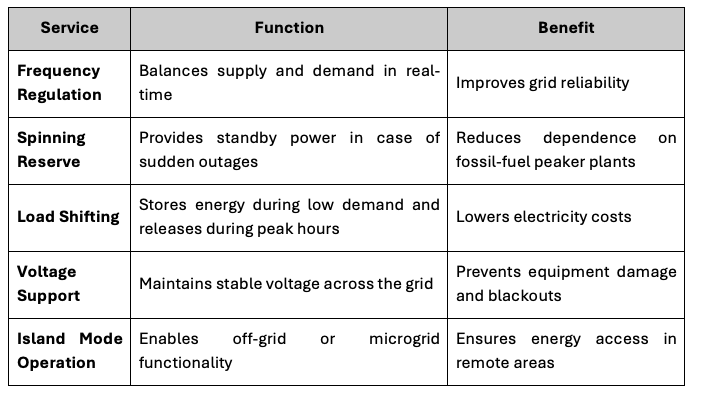
3. Grid Services Provided by BESS

Best Practice: Utilities and grid operators should integrate BESS with smart grid technology for optimized energy management.
4. Future Trends: BESS in a Decentralized Energy System
• Virtual Power Plants (VPPs): Aggregated BESS systems acting as a single energy provider.
• Vehicle-to-Grid (V2G) Integration: EV batteries serving as temporary storage for grid stabilization.
• Community Microgrids: Localized energy networks powered by renewables and storage.
• AI and Predictive Analytics: Optimizing BESS performance for grid efficiency.
Key Takeaway: The future of BESS is decentralized, flexible, and AI-driven, making renewable energy more reliable and accessible.
Conclusion
BESS plays a pivotal role in renewable energy integration, addressing the challenges of intermittency, grid stability, and peak demand. As energy markets evolve, BESS will be at the core of a decentralized and sustainable energy future.
Whether you are planning a utility-scale storage project, integrating renewables into your energy portfolio, or evaluating BESS suppliers and technologies, independent technical expertise is essential for project success. Sinovoltaics supports developers, investors, EPCs, and asset owners with technical advisory, supplier due diligence, factory audits, quality assurance, and supply chain risk management.
Contact us to learn how we can support your Battery Energy Storage System projects and renewable energy strategy.