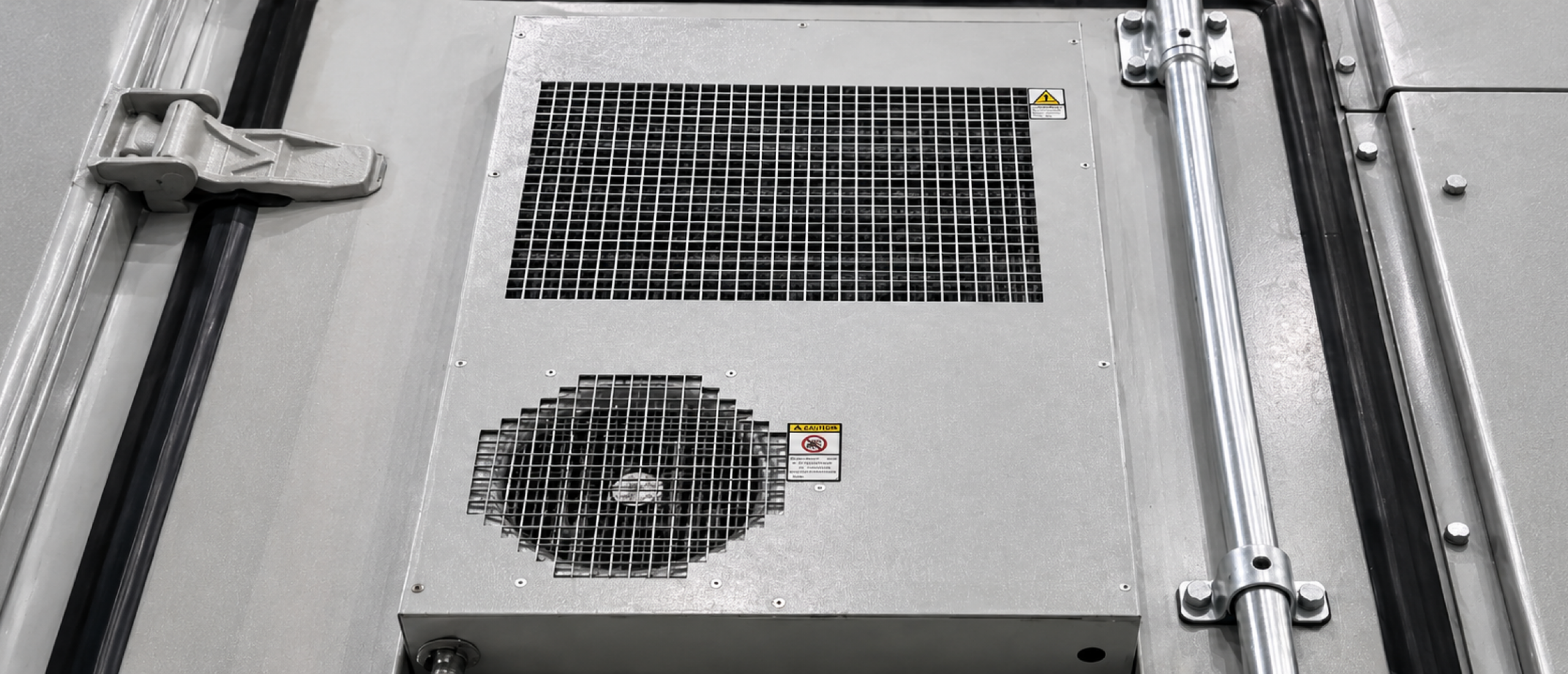
BESS HVAC

The Best, Good, and Bad of HVAC FAT Testing for BESS

Introduction
HVAC is the system everyone forgets about until the temperature delta between two racks hits 10°C and some BMS alarms are triggered on site.

It is the unglamorous part of a BESS. Two rows in the datasheet, five lines in the test plan, and one of the first things the factory rushes through to keep the schedule. We have inspected over 350 factories. The pattern is the same almost everywhere: HVAC is tested as if the only failure mode is “no cold air.” The real failure modes are different, and the FAT often misses them.

This is a post in our Best, Good, Bad series on FAT testing. Three ways the same test gets done. Three very different levels of protection for your battery.

Bad: software command only
Here is how it typically happens at the factory: the operator stands in front of the screen of your BESS. The operator types a setpoint. The HVAC controller reports back that it received the command. Tick, done.

What this confirms: the controller works correctly. That is the full scope of the test.

What it does not confirm: that the HVAC components work: the compressor actually runs, that the fans actually spin, that refrigerant is actually cooling, that the heater (if present) actually heats, and so on.

Good: cooling tested for real
This is a big step up already : someone actually runs the unit and measures temperature.

The HVAC is set to cooling. It runs for several minutes. Air temperature inside the container drops. It looks like an HVAC test.

This is what most factories do, in our experience. It is much better than the software-only version. You confirmed that the cooling loop works at factory room (understand warehouse) temperature, with no load.

One of the biggest limitations is that the evaluation of the performance of your HVAC heavily depend on the outside temperature. If you are running this test in the middle of the winter, it is going to be harder to see how your HVAC efficiently reduce the battery temperature.

And you only tested one HVAC mode out of three. You did not test heating. You did not test humidity control.

A BESS in the field will face 40°C ambient with a 1C discharge happening inside the container. If the factory test has been 25°C ambient with no (electrical) current flowing, it is not the same.

Best: heating, cooling, and humidity, all three
The version that tells you the HVAC is actually ready for the field.

Three modes get tested separately:

Cooling. As described in the “good“ section above, cool the unit with the doors closed. Make sure the target temperature is reached.

Heating. This is the mode factories skip the most. If the BESS will be deployed in any climate that drops below 5°C, the heater has to work. Test it. Run the unit in heating mode. Confirm the heater turns on.

Humidity. The mode that gets ignored almost everywhere. Lithium cells do not like condensation. Or any electrical system in general. If the dew point is crossed in your BESS, you might get water inside your container. That is a slow-moving disaster. The test: run the unit in dehumidification mode if the design has one, log relative humidity, and confirm the system holds humidity below the manufacturer’s spec (usually 50% or lower).

Then you run the realistic version : As part of the capacity test, run a full charge and discharge cycle while the HVAC is running. The cells will generate heat and the HVAC will have to handle it. Log temperature deltas across racks during the cycle, not just at idle.

Three things to write into your FAT protocol

  1. All three modes get tested, separately. Cooling, heating, humidity. Not a generic “HVAC operational test.” If your site never drops below 10°C, you can skip heating, but only if the contract documents that explicitly. Otherwise, all three.
  2. Test under load, not at idle. The ultimate HVAC test is a BESS capacity test: Run a charge and discharge cycle while the HVAC is running. The cells generate heat in the field. They should generate heat during the test.
  3. Ensure you test humidity rate management as part of your FAT. This is important for most climate to avoid condensation being created.


Why this matters more than people think
Cell-level aging is highly temperature dependent. A 10°C temperature increase roughly doubles the rate of calendar aging. A BESS where the back rack runs 8°C warmer than the front rack will see those back cells degrade much faster. Over 15 years, that is the difference between a system that hits its end-of-warranty capacity and a system that does not.

Humidity is worse. Condensation on a busbar is a corrosion event. Corrosion on a busbar is a resistance event. Resistance on a busbar is a heat event. Heat on a busbar is the start of a different kind of post.

The HVAC is not a comfort system. It is part of the safety chain and part of the warranty chain. Test it like one.

The takeaway
If your HVAC FAT only tested cooling, you tested a third of the system. If it only tested through software, you tested zero of it.

Run all three modes. Push the system under load.

The HVAC is one of the cheapest parts of the BESS to fix at the factory and one of the most annoying to fix on site. The test that saves you that bill is the one that takes some time and looks boring on a schedule.

Planning a BESS project? Talk to our team about a witnessed FAT that tests heating, cooling, and humidity under load, on every BESS.

Place comment