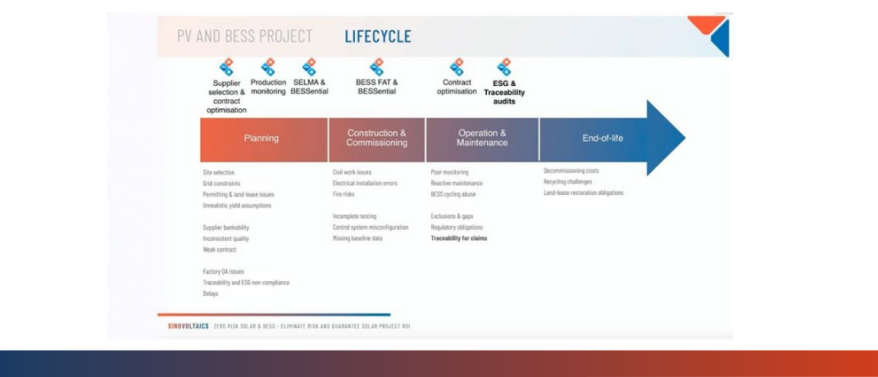
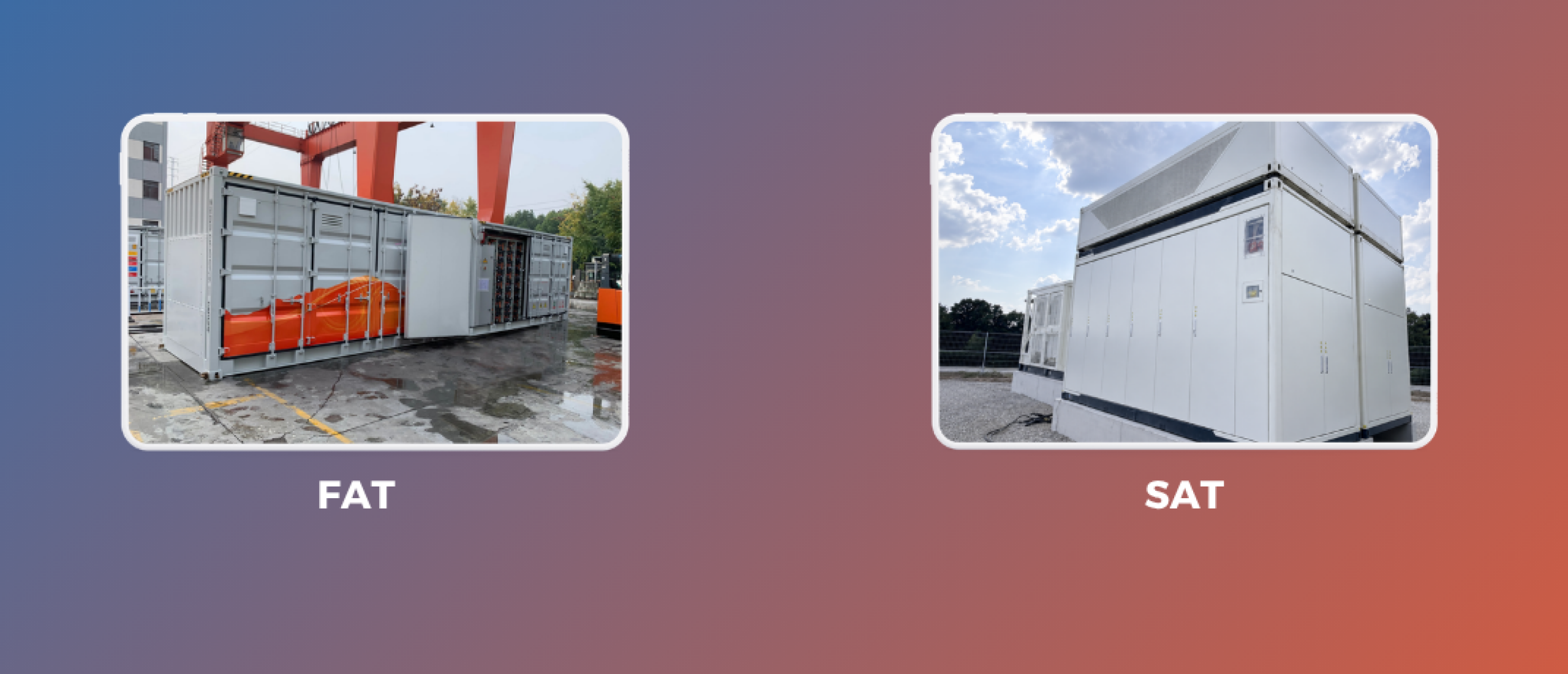

If you're commissioning industrial equipment, power systems, or any complex technical installation, you've probably come across two acronyms that get used constantly but often confused: FAT and SAT. They sound similar, they both involve "acceptance testing," and they both exist to answer the same basic question — does this system actually work?
But they answer that question at very different moments, in very different environments, and for very different stakes. Understanding the distinction isn't just semantics. It can save you from costly surprises after take-over and give you a solid foundation for the next decade of operation.
FAT: Proving It Works Before It Ships
Factory Acceptance Testing (FAT) happens at the manufacturer's facility, before the equipment ever leaves the factory floor. It's the first formal checkpoint where the buyer (or their representative) verifies that the system has been built and functions according to the agreed specifications.
During FAT, you're typically checking things like:
- Functional performance under controlled factory conditions
- Compliance with design specs, drawings, and datasheets
- Safety systems, interlocks, and protection logic
- Component quality and workmanship
- Software and control logic behavior
The key word here is controlled. FAT happens in an environment the manufacturer knows well, stable power, no transport stress, no site-specific quirks. It answers one question: "Is this system built correctly and does it perform as designed, in ideal conditions?"
If something's wrong at FAT stage, it's far cheaper and faster to fix. The equipment hasn't been packed, shipped, or installed yet. Catching a fault here can save weeks of downstream delay.
SAT: Proving It Still Works After Everything That Could Go Wrong, Went Right
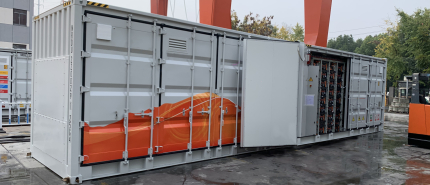
Site Acceptance Testing (SAT) happens after the equipment has been transported, installed, and connected, often to the grid, to other plant systems, or to live process infrastructure. This is where things get real.
Between FAT and SAT, a lot can happen:
• Vibration and shock during transport
• Improper handling or storage
• Installation errors (wiring, torque, alignment, grounding)
• Interactions with other systems now connected for the first time
• Real-world environmental conditions (temperature, humidity, dust, grid quality)
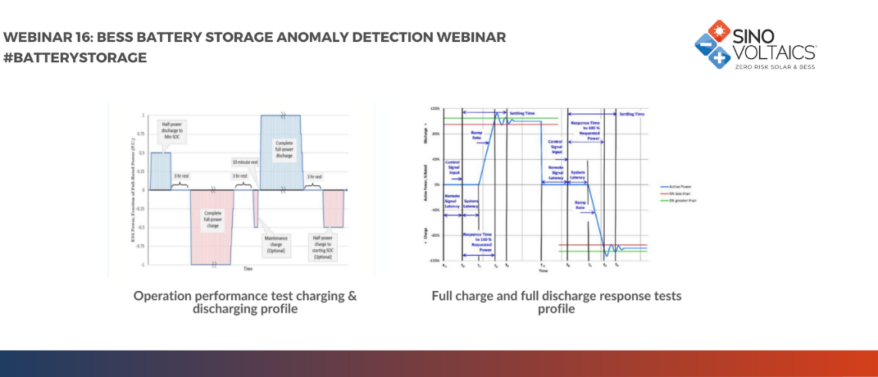
SAT re-verifies performance in this new, real context. It confirms that whatever worked in the factory still works once it's sitting on-site, wired into the actual plant, and exposed to actual grid conditions. It typically covers:
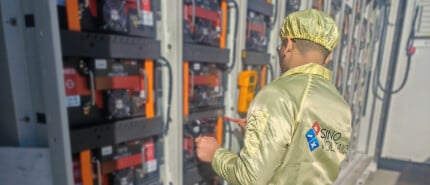
• Physical installation checks (mounting, cabling, grounding, torque values)
• Functional and performance testing under live or near-live conditions
• Grid connection behavior (synchronization, protection response, power quality)
• Integration with other site systems
• Final safety verification before operational hand-over
Why SAT Is the Gate That Really Matters
Here's the part that's easy to underestimate: SAT isn't just a formality — it's your last quality gate before take-over.
Once SAT is signed off, the system is typically handed over to the operator, and the clock starts on warranty terms. If a defect surfaces later — six months in, two years in, five years in — the SAT report becomes the reference point. It's the documented, agreed-upon evidence of what "working correctly" looked like at the moment of hand-over.
That makes SAT documentation critical for:
- Warranty claims — proving a fault developed after hand-over, not at hand-over
- Dispute resolution — establishing a shared baseline both parties signed off on
- Long-term performance tracking — comparing future performance against a known-good starting point
- Regulatory and insurance requirements — many jurisdictions and insurers require documented SAT for grid-connected assets
In other words, FAT protects your project timeline. SAT protects your project's next ten years.
FAT and SAT Aren't Redundant — They're Complementary
It's tempting to think that if FAT passed, SAT is just a rubber stamp. It isn't. FAT and SAT test different variables entirely: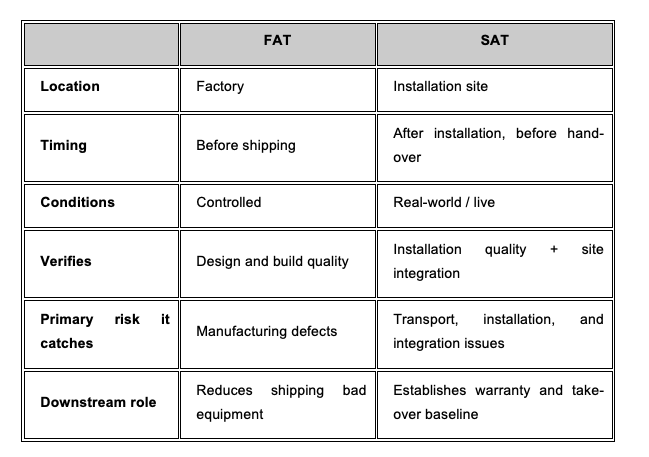
Skipping SAT because "it already passed FAT" ignores everything that happens in between and that's often where real-world problems hide.
The Bottom Line
FAT tells you the system was built right. SAT tells you it was installed and connected right, and it gives you the documented baseline you'll rely on for warranty claims and performance benchmarking for years to come.
If you only budget time and rigor for one of these tests, you're leaving a gap exactly where problems are most likely to appear, during transport, installation, and first live connection. Treat SAT with the same seriousness as FAT, and you'll walk into take-over with confidence, not crossed fingers.
Preparing for FAT or SAT on Your Project?
Whether you're getting ready for factory acceptance testing or need an independent third party to verify your system on-site, our team can catch issues before they turn into costly problems.
Contact us today to discuss your FAT and SAT requirements.